Third Spaces, Peers or Partners
From URL to IRL / or where to find the others

“Face it, you even want to talk to that girl in the elevator. But what if that girl in the elevator is thinking the same thing? Who knows what you might learn from taking a chance on conversation with a stranger? Everyone carries a piece of the puzzle. Nobody comes into your life by mere coincidence. Trust your instincts. Do the unexpected. Find the others.” – Timothy Leary
That quote was always important in the circles in which I mingled. It certainly cast a long shadow over the way we interacted.
Which is why I noted many young people, especially men, lamenting the lack of third spaces and the difficulty meeting others to make friends (let alone the ongoing challenge of meeting potential partners who share the same qualities) with a little confusion.
I have observed that younger men think it important not to listen to the advice of millennials, gen-x, or boomers on what we think we did, but copy what we actually did that lead to success (or the experience gleaned from miserable failures).
Unfortunately for introverted, shy and anxious people (such as my wife and I), this means not only “putting yourself out there” but actively organising meetings and having the confidence to actively endure failure and embarrassment in awkward positions, especially as leaders, founders and organisers. Perhaps I learned this most acutely when watching others spectacularly crash and burn in public speaking spaces involving the military, but it worked, it always works.

Fundamentals.
The crucial basic rule is to force online experiences into real life ones. You must join local groups, and if they are absent, create them. To succeed we must command ourselves to be present.
Virtual spaces must not be allowed to replace real ones, they should always be seen as a mere assistant to physical meetings.

URL to IRL
To transform stagnant digital experiences into real ones, you must first actually (somewhat ironically) build the network online, and then agree to meet in person, which is obviously easier if the members are in the same geographical region. Make that original founding impulse focused on a shared cultural or regional foundation. “English Powerlifting Club” does not leave any room for Spanish or Russian or Australian online users to get confused about where the events might be held, or if they do take part in online chatter, they can be encouraged to arrange their own meeting. This was relatively easy for us because England is small, and when you meet people online they will never have to travel obscenely far to get to events.
Forums should never remain online. Try to always give the digital space the feel of being a mere temporary zone before physical presence.
One simple method is to always have participation imply physical presence. In groups I have formed or been a part of, art collectives, lifting clubs, book clubs, political events etc. physical participation was never voluntary. If you were not visibly present at the events we put on it was unlikely you would remain in the online sphere for long, not out of some kind of “you cannot sit with us” type but because one would very quickly fall out of the loop.
Participation of any kind that is solely online should be discouraged. Every project should be considered from this point of view: why would we want this to remain just one more online circle jerk?

Concrete Examples.
Political Organisation. Find like minded people online and simply create something tangible. A book club, discussion group, think tank, it does not matter how small. No one really laughs at the people doing things, and if they come or they do not, why does it matter to your end goal? My experience has actually always been the opposite, people are drawn to those who are trying to get things moving. The extreme left are very good at this, and the reactionary conservatives are terrible at it. Maybe it is because postmodernism is inherently an embarrassing doctrine that left wing individuals can so comfortably tolerate the embarrassment of consistent failures which eventually cumulatively add up to success?

Religion. The creation of a prayer group, Bible study group, Latin study group is always well received, especially by church hierarchies. A man in my community organised a group to learn Compline, and to everyone’s surprise, around fifteen people came to the first meeting. Religious life is by nature organised around groups: coffee and tea after Mass, parish fete, monastery and abbey events, these are all natural places to meet the people in the community. You absolutely must participate when invited or offered. My wife is superb at this, at only her mid thirties she has already become a parish busybody.
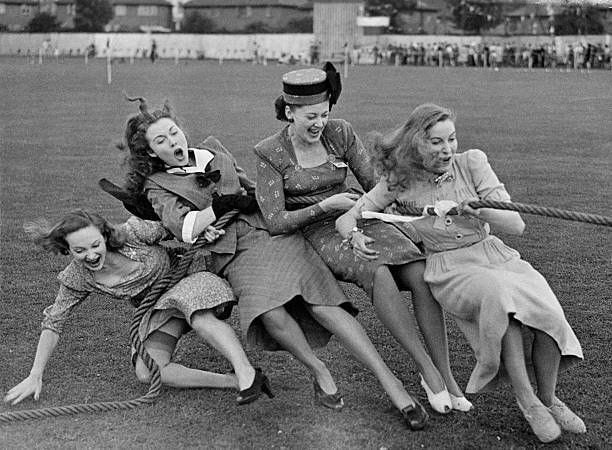
Sports Clubs. Sports have always been an important social pillar in my life. If I were single, this would probably be the main way I would meet potential partners. It was the same for my wife. Sharing a passion for sports, whether through play or practice, is one of the obvious ways those of similar interests come together organically. What else is a sporting event but one enormous mating ritual (really, at its root)?
I have participated actively in:
Tug-of-war clubs and competition.
Weightlifting clubs and competition.
Powerlifting clubs and competition.
Strongman clubs and competition.
Jiu-jitsu, wrestling and MMA clubs.
I still attend the Olympic weightlifting club at my local gym and have competed at the small CrossFit events they put on.
I have done half marathons, obstacle course races etc.
Sport clubs create repeated exposure and complicated social risks equal to all participants. The military celebrates sporting clubs because of these shared challenges, visible progress, a learned art form, a community respect and shared difficulty and bravado at success. All of this translates into obvious social benefit for the individual and the group. This is also why the military prefers (and funds) larger team sports over individual ones (various of my units preferred supporting football and rugby over boxing or fencing etc.)
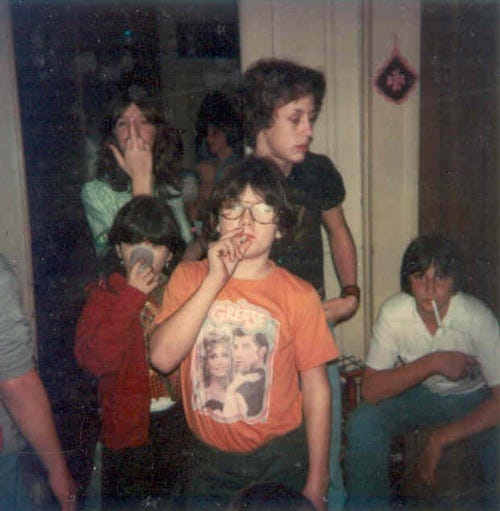
Games and Music scenes. I lump these together because they share the same motivation at root: a subculture creating a sense of belonging around a similar event which all participate in. Growing up in the late 1990s things like Dungeons & Dragons, Warhammer 40,000, Magic the Gathering etc. were important events which required social spaces, the local games club and my peer group etc. The entire principle of “scaring the hoes” was non-existent when I was a teen, my male friendship group did as we pleased and there were always women present. Unsurprisingly, the women I gravitated towards were artists, musicians and intellectuals, or what would now be called “indie or alt-girls”. Thus, many of them were not popular in the traditional English sense, as none of us were, but they were my friends. If you are looking for a good wife, find a good friend first. This is really one of those things I find most bizarre about modern dating, I did not know a single person who met a stranger to go on a date when I was a teen, all of my peers friends and their girlfriends were people we all knew from among our friendship group, or wider social circle. I think dating apps have ruined this source of intimacy between the genders. How can you know you want to marry a woman if you do not know her first?
The music scene was hugely important to millennials 1999-2009, the hardcore and punk scenes were formative cultural bedrock. These spaces are fraught with political tensions now, but it should be worth risk and enduring the misery of potential difficulties. More importantly, learn to play an instrument, then play with other musicians, this is much more valuable culturally if you learn to play a Classical instrument, and/or attend concerts, which obviously attract a certain type of person, especially those who adhere to certain traditional modes. Shared artistic endeavours create stronger bonds. However, these can also be learned; my wife and I met via the alt/goth crowds and now go to the opera together.
Documentary Culture Creation. Make a journal, photograph events, start a zine, write down and publish ideas. I learned this from the punk and black metal tape trading scenes in the early 00s: if you do not do something no one else will. If not you who? If not now when? Create something tangible, even small and quirky and weird, this draws people into a conceptual space which cries out to become physical. What is done as an idea first quickly becomes a reality if it switches people on. It may start out slow and face difficulties, but things done for the passion and not cynical desire to get results usually succeed.

Non-negotiable: be physically present. If someone invites you to something, take them seriously. We should imagine, Religious gatherings; weightlifting competitions; Art galleries; Concerts; highland games; Renaissance fairs; manor open days; Garden parties; Tea parties; all as opportunities to network. If these events do not exist near you, then work with others to organise them or seek out those who will.
Left wing women are especially good at this type of organisation, with like-minded individuals flourishing simply because someone in their milieu had the foresight to set aside a day and time and say “let us meet here and do this” and then they document it and make it seem culturally important.
Relationships. When it comes to women, I think ideology alone should never be a driving factor. I found my wife utterly captivating when we met, in physicality, style, temperament, and that was enough for me. I fell for her and pursued her. When we both became single, I was clear about what I wanted. We got engaged, married a year later and had our first daughter the following year. When we met, she was vegan, very left-wing and involved in climate change protests and animal rights activism, over the years she has become the polar opposite of the girl I met. The important thing is not to seek ideological purity from the start, but to be attracted to someone and have desire manifest as pursuit.
Reality. If you do not organise something yourself, nothing will happen. If you are not present at the meeting, you do not exist socially, you are an avatar and digits on a screen. If you remain on the internet, everything remains abstract and flat. People are messy and chaotic and ugly in reality, and that is where you should meet them. Those who create communities are rarely the most charismatic, at least I do not feel as though it was my charisma which built the communities I have been involved with in the past. In all of those instances I was simply just the first person to say “we should move this quirky idea into a real space” and usually, to start with, that space was just a field or a forest or a village hall.